
- 25 Apr, 2026
-
 by Emily Rhodes
- Business
- 0 Comments
Opening your mailbox to find a letter from the Internal Revenue Service is a universal source of anxiety. When that letter is a CP2000 Notice proposing a significant increase to your tax liability, it is easy to feel overwhelmed. For high-earning professionals, business owners, and real estate investors managing complex portfolios, an IRS notice is often perceived as an immediate threat to financial stability. However, a CP2000 notice is not a formal audit, nor is it a final bill. It is simply a proposed adjustment based on a discrepancy between the income you reported on your return and the information the IRS received from third parties, such as employers, brokerages, or clients. At MLD Tax Advisory Firm, we emphasize prudence, calm execution, and results-oriented service. We help our clients navigate these discrepancies with precision, protecting their assets and ensuring they do not pay a single dollar more than they legally owe. If you have received a CP2000 notice, here is your step-by-step response plan to resolve the issue effectively.
.jpg)
What is an IRS CP2000 Notice? (And Why Prudence is Key)
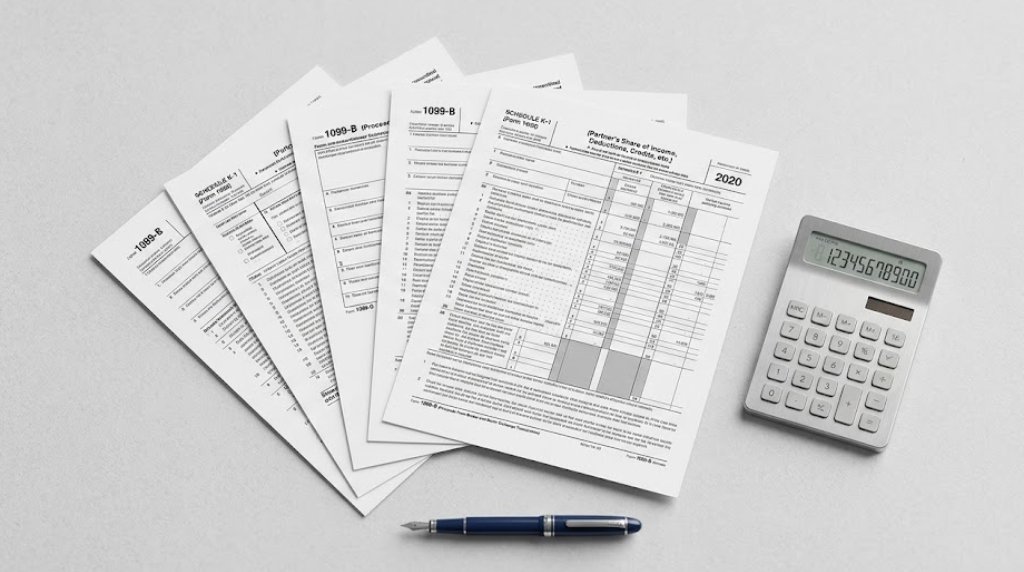
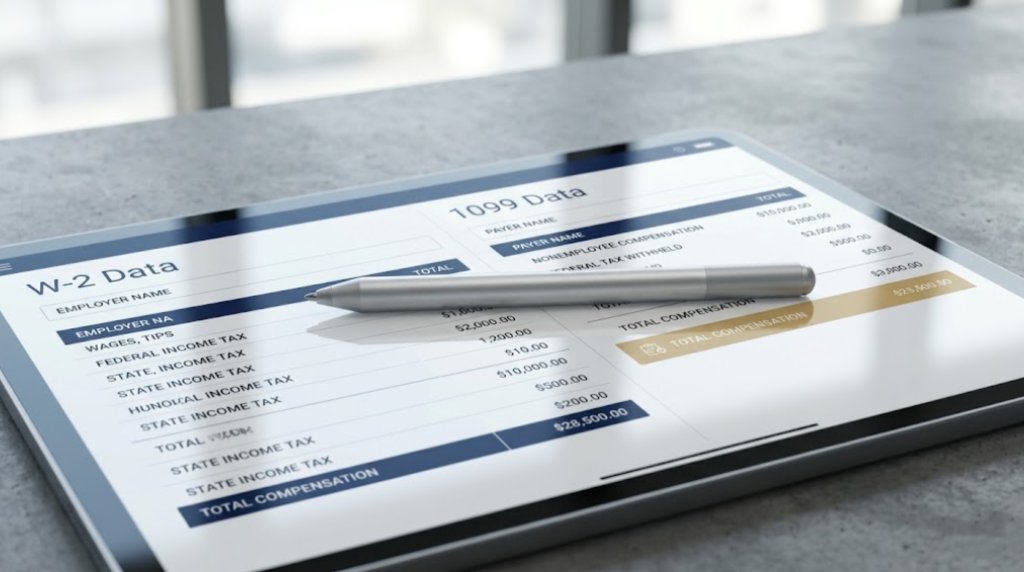
The IRS utilizes an Automated Under reporter (AUR) system. This system cross-references the tax return you filed against the W-2s, 1099s, 1098s, and K-1s submitted by third parties under your Social Security Number or Employer Identification Number (EIN).
When the AUR system detects a mismatch, for example, a brokerage reports $15,000 in capital gains, but your return only shows $5,000, it automatically generates a CP2000 notice. This document outlines the specific discrepancies, calculates the proposed additional tax, and typically adds interest and penalties to the balance.
The most important first step is to recognize that the IRS’s automated system is not infallible. Third parties frequently make reporting errors, issue duplicate forms, or attribute income to the wrong tax year. Approaching this notice with personal responsibility and a methodical mindset is the surest path to penalty avoidance and peace of mind.
Common CP2000 Triggers for High-Net-Worth Taxpayers
Complex income streams naturally increase the surface area for reporting discrepancies. Among our clients in San Diego and nationwide, we frequently see CP2000 notices triggered by the following scenarios.
Mismatched 1099s for Freelancers and Consultants
High-level consultants and freelancers often juggle dozens of 1099-NEC or 1099-MISC forms. If a client issues a 1099 late, issues it to your personal SSN instead of your business EIN, or amends a form without notifying you, the IRS system will flag the missing income.
Unreported Investment and Real Estate Income
Active investors dealing with stock options, cryptocurrency trades, or real estate syndications receive a high volume of tax documentation. A missing Schedule D (Capital Gains) or a misreported 1099-B from a brokerage is a prime trigger for a CP2000, often resulting in grossly inflated proposed tax liabilities because the IRS does not automatically factor in your cost basis.
S-Corp and K-1 Discrepancies
For business owners and partners, Schedule K-1s distribute income from S-Corporations, partnerships, and trusts. If the entity amends its return after you have filed your personal return, or if there is a delay in the K-1 issuance, the AUR system will catch the misalignment.
Your Step-by-Step CP2000 Response Plan
You generally have 30 days from the date printed on the notice to respond. Missing this deadline will result in the IRS formally assessing the tax and initiating collection. Follow these steps to protect your position.
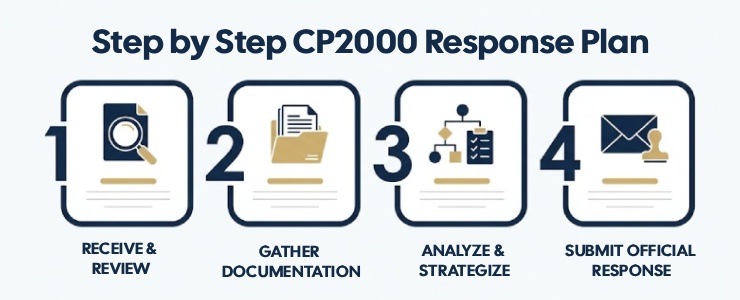
Step 1: Review the Proposed Changes Thoroughly
Do not assume the IRS is correct. Carefully read the CP2000 notice to identify exactly which items of income, deductions, or credits the IRS is questioning. Compare the specific forms listed in the notice (e.g., "Form 1099-B from Charles Schwab") against the tax return you filed for that specific year.
Step 2: Gather Your Original Tax Documentation
Compile all original tax documents used to prepare the return in question. If the notice claims you failed to report a 1099-NEC, search your records for that specific document. If the IRS is proposing taxes on the full sale price of an asset, gather the documentation that proves your original purchase price (cost basis) to reduce the taxable gain.
Step 3: Determine Your Stance (Agree, Partially Agree, or Disagree)
The CP2000 notice includes a response form that requires you to select one of three options:
• I agree with all changes: Only check this if you have verified the IRS's math and acknowledge the omitted income. You will need to sign the form and submit payment.
• I do not agree with some of the changes: Select this if you acknowledge one error but dispute others, or if you agree you omitted income but want to claim offsetting deductions the IRS did not consider.
• I do not agree with any of the changes: Select this if the IRS's information is entirely incorrect (e.g., identity theft, duplicate 1099s, or income reported under the wrong tax year).
Step 4: Draft a Factual, Emotionless Response
If you partially or fully disagree with the notice, you must provide a written explanation. This is not the time for frustration or lengthy narratives. Be concise, factual, and strictly professional. State clearly why the proposed changes are incorrect and reference the supporting documentation you are attaching. Never send original documents; only send clear copies. Send your response via certified mail with a return receipt requested to establish a verifiable paper trail.
Why Premium Taxpayers Partner with an Advisor for IRS Notices
Responding to the IRS requires a deep understanding of tax codes and procedural rules. While the steps above outline the mechanics of a response, the strategy behind it is what determines the final financial outcome.
We routinely help business owners and investors navigate complex CP2000 notices. For instance, if an automated notice proposes steep penalties, a specialized tax advisor can often construct a compelling case for penalty abatement based on reasonable cause. We step in to manage correspondence, resolve misalignments, and communicate directly with the IRS on your behalf. This mutual trust allows you to remain focused on running your business and living your life, rather than waiting on hold with the automated underreporter unit.
Our focus is entirely on client outcomes: minimizing tax liabilities, eliminating unjustified penalties, and restoring your peace of mind through rigorous, compliant tax strategy.
Secure Your Financial Peace of Mind Today
An IRS CP2000 notice is a time-sensitive matter, but it is entirely manageable with the right expertise in your corner. Do not pay a proposed liability without verifying its accuracy, and do not let the 30-day window expire. If you have received a tax notice and want professional, results-oriented guidance to resolve it, we are here to help. Book your free consultation today to discuss your notice and discover how our tax advisory services can protect your wealth.

0 Comments
Post a comment